Twisted, Pulled, or Sore? A Simple Guide to Healing Sprains and Strains
Sprains and strains are common injuries that can occur in many situations — from playing sports to lifting something incorrectly or even during everyday activities. While they may feel like minor setbacks, treating them properly from the start is crucial to ensure quick recovery and prevent further damage.
In this blog, we’ll break down how to treat sprains and strains at home, and when it’s time to consult a physical therapist for more specialized care.
What’s the Difference Between a Sprain and a Strain?
- Sprain: A sprain occurs when the ligaments (the tough bands of tissue that connect bones) are stretched or torn. Commonly sprained areas include the ankles, wrists, and knees.
- Strain: A strain affects muscles or tendons (the tissue that connects muscles to bones). Strains often occur in the back, hamstrings, or shoulders.
The R.I.C.E. Method: Your First Line of Defense
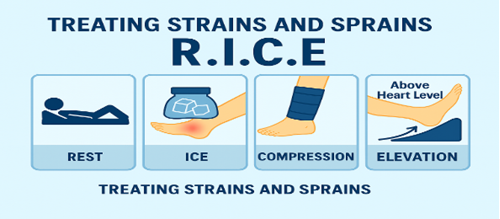
For both sprains and strains, the R.I.C.E. method is a widely recommended treatment approach in the first 48 hours after the injury.
- Rest: Rest the injured area to prevent further strain. Avoid putting weight on the injured joint or muscle. Depending on the injury, this could mean using crutches or a brace to limit movement.
- Ice: Apply an ice pack (or a bag of frozen peas) to the injured area for 15-20 minutes every 1-2 hours. Ice helps reduce swelling and numb pain. Place a cloth between the ice and your skin to prevent frostbite.
- Compression: Use an elastic bandage or compression wrap to reduce swelling. Avoid wrapping it too tightly, as this could restrict blood flow.
- Elevation: Elevate the injured area above the level of your heart whenever possible. This helps reduce swelling by allowing fluids to drain from the injury.
When to Seek Professional Help: Signs You Need a Therapist
While many sprains and strains heal with basic self-care, certain signs may indicate a need for professional treatment. Consider seeing a physical therapist if:
- You experience persistent pain and significant swelling or bruising: If your pain doesn’t improve after 72 hour and have excessive swelling or bruising could indicate a more serious injury, such as a ligament tear or muscle rupture, which may require advanced rehabilitation.
- You cannot move the injured area: If you’re unable to bear weight on the affected joint or can’t move the muscle, there could be a more severe injury like a torn ligament or tendon, which needs medical attention.
- You feel instability in the injured area: If the injured area feels weak, unstable, or wobbly, especially in joints like the ankle or knee, this could signal ligament damage, and a physical therapist can guide your recovery with targeted exercises.
- You have a history of recurring injuries: If you’ve sprained or strained the same area multiple times, physical therapy may be needed to address underlying instability or weakness that make you more prone to injury.
How a Physical Therapist Can Help
A physical therapist will assess the extent of your injury and provide treatments such as:
- Manual therapy to reduce pain and improve range of motion
- Strengthening exercises to rebuild the muscles around the injured area and prevent future injuries
- Balance and coordination training to improve stability
- Stretching exercises to restore flexibility and mobility
- Education on posture, body mechanics, and safe movement patterns to prevent re-injury
Final Thoughts
Most sprains and strains improve with rest, ice, compression, and elevation (R.I.C.E.). However, if you experience severe pain, prolonged symptoms, or difficulty moving the injured area, it’s important to consult with a physical therapist. A therapist can help you recover faster, restore function, and prevent future injuries by guiding you through a personalized rehabilitation plan.
Remember, proper treatment early on is key to ensuring a full recovery, so listen to your body and seek professional care when needed!
Try one of our conveniently located Physical Therapy Clinics:
SANDUSKY
2500 W. Strub Rd.
Suite #150
Sandusky, OH 44870
Phone: 419.626.4162
CLYDE
112 Independence Way
Suite #170
Clyde, OHIO 43410
Phone: 567.855.2807
FREMONT
629 Bartson Rd.
Fremont, Ohio 43420
Phone: 419.355.9800
NORWALK
164 Milan Ave.
Norwalk, Ohio 44857
Phone: 419.660.0876
